
Harvest 2026
In Conversation with Jane Eyre
An early harvest, tiny yields and Jane’s first vintage working across Maison Jane Eyre and Domaine Comte Armand.
September 23, 2026 · Cissey, Burgundy
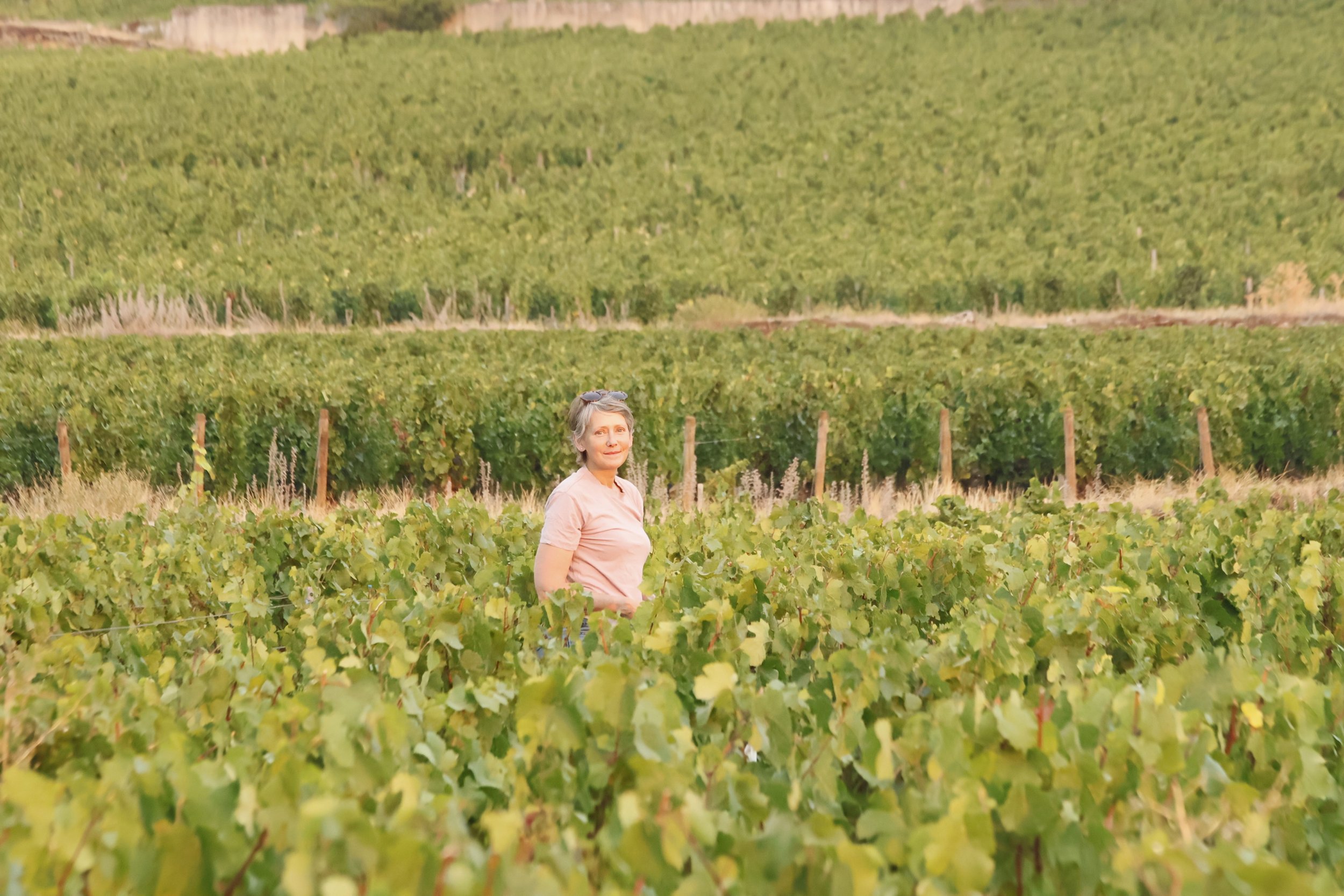
Photo by Stella Renard
Could you start by describing the 2026 vintage and the growing season?
The growing season this year was very hot and very dry, consistently really since May. There was a little bit of hail at one point.
It was the earliest harvest on record. We started picking on the 16th of August and finished on the 31st, which is just unheard of.
Surprisingly, given how hot and dry the season was, the vines held up incredibly well. Old vines with deep roots were obviously able to find enough water to ripen the crop.
We have quite intensely coloured Pinot Noir this year, and fairly rich, ripe fruit. But the yields were very small because there was no rain, which meant smaller berries and less juice content.
Overall, though, I think it has turned out surprisingly well.
It sounds like that was one of the surprises of the vintage — very small yields, but impressive quality once the fruit came in?
It’s very small. For me, for the négociant, it’s my smallest vintage ever.
Smaller than 2021?
Yes.
Do you have a sense yet of the style or personality of the 2026 vintage? Is there another vintage you would compare it to?
I wasn’t here in 2003, but from my own experience, I would say perhaps 2018 and 2020 in terms of the ripeness of the fruit — but with much lower yields.
Looking at Burgundy from the outside, people have seen the heat waves and the dry conditions and might assume that means big, alcoholic wines. Do you think there are misconceptions about what a hot vintage actually means here?
I think people from the outside are getting their information from journalists and, obviously, Instagram now. So they assume hot, dry season equals big, alcoholic wines.
But Burgundy is a patchwork of small vineyards with lots of different microclimates and aspects. You can never make a blanket statement about the whole region.
As always, it depends on where your vineyards are. Some vineyards might retain more freshness than others. It depends on where the vineyard is, when it was picked, how it was looked after and the age of the vines.
There’s always a lot of variability.
That’s one of the things I always say to people trying to understand Burgundy: go and actually walk through the vineyards. You don’t really understand it until you see the differences yourself — the wind, exposure, sun and terroir.
Exactly. And the other thing this year was the dry weather combined with the constant northern wind. That meant there was literally no disease.
The vines looked picture-perfect this year, and the fruit did too. There was also very little residual spray because we simply didn’t have to spray very much.
One of my growers sprayed three times. That’s unheard of.
Whether you were organic, biodynamic or conventional, we just didn’t have to spray very much.
You were also balancing harvest at two wineries this year. What did your days look like? Did the fruit come in on different days or at different times? How did you organise it?
It worked out that a lot of the domaine fruit was picked before my growers.
Again, depending on where the vineyards were, there was a lot of variability. Not everything was ready within one single week. I was quite lucky that everything was spread across the two weeks.
And while it is my name on the label, it’s not a one-person show. It’s always a team effort.
I had an amazing team that I was able to split across the two wineries — French, Australian, English and New Zealand. I had a really great team of competent, clever people.
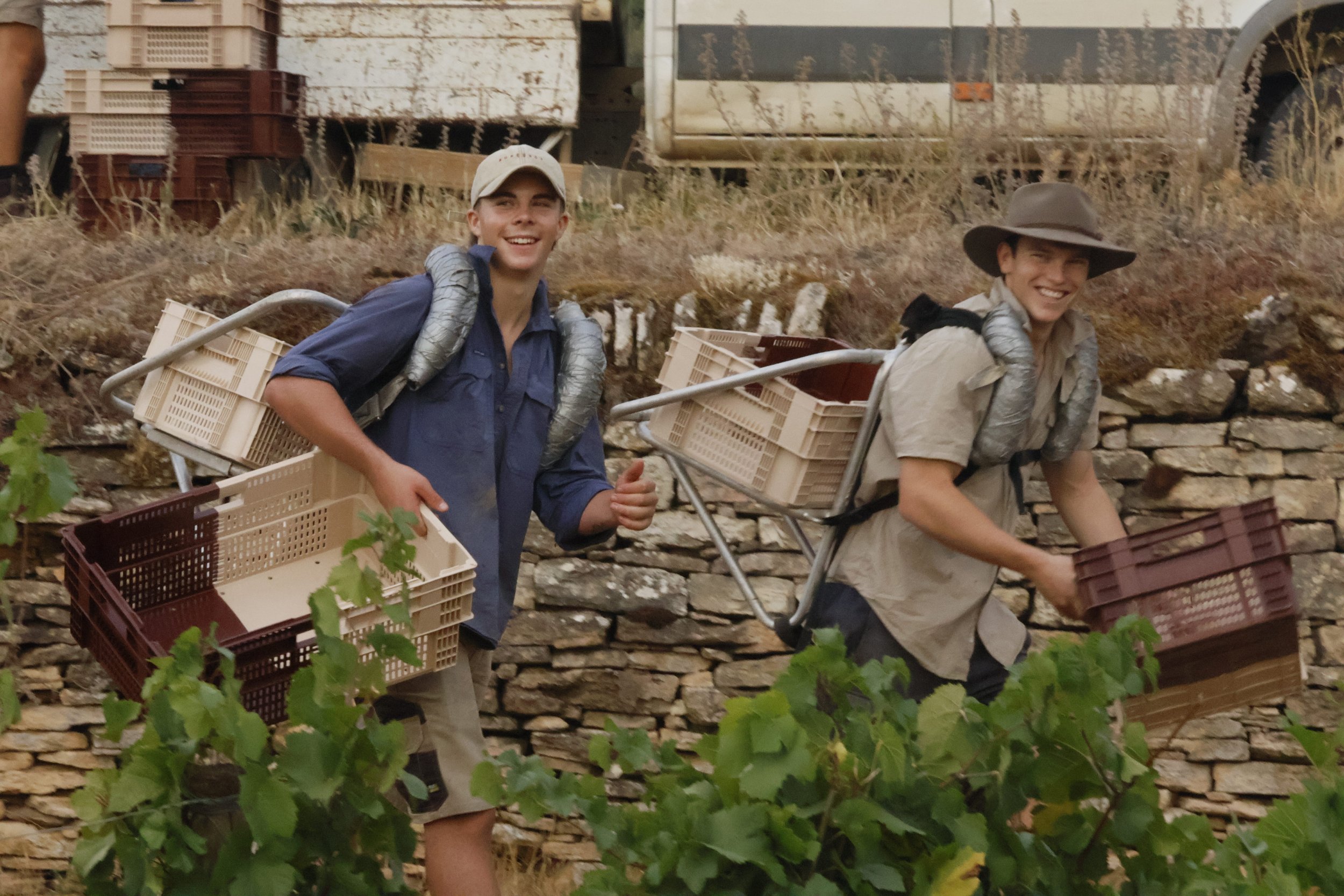
Photo by Stella Renard
I imagine you need a lot of trust in your team, particularly when you’re having to leave one winery and go to the other.
Yes. There’s a lot more delegation on my part now, so I have to have a strong team. You have to trust that people can do what you want them to do when you’re not there.
And you have to learn how to delegate. You need to be a couple of days ahead of everything, so they know what they’re doing, you know what they’re doing, and they’re doing what you want them to do.
At Domaine Comtes Armand, how do you balance staying true to such a historic domaine while also bringing your own winemaking approach?
I’m not there to reinvent the wheel. The idea isn’t to come in and radically change everything because I feel like I have to put my stamp on the wines.
The first year is a bit like when I get a new parcel for my négociant. You have an idea of what an appellation or a particular vineyard will do, but you don’t really know what it’s going to do until you’re fermenting it and you see what comes out the other side.
With the domaine, it isn’t just one new parcel — it’s a whole domaine of new vineyards.
So this year was really about getting the fruit in and learning more about the individual character of each parcel.
Like with my négociant, it’s a work in progress every year because every vintage is different. Over different vintages, you build up a profile of what that fruit gives you in a particular growing season.
So it’s very much the beginning of a long journey.
Is there anything else you’d want people to know about the 2026 vintage?
The best 2026s ever! Although that’s a little loaded for me because I have two harvests, so I have to be careful about saying it’s better than my Australian wine.
The best 2026s in the Northern Hemisphere. Best 2026s ever... so far.
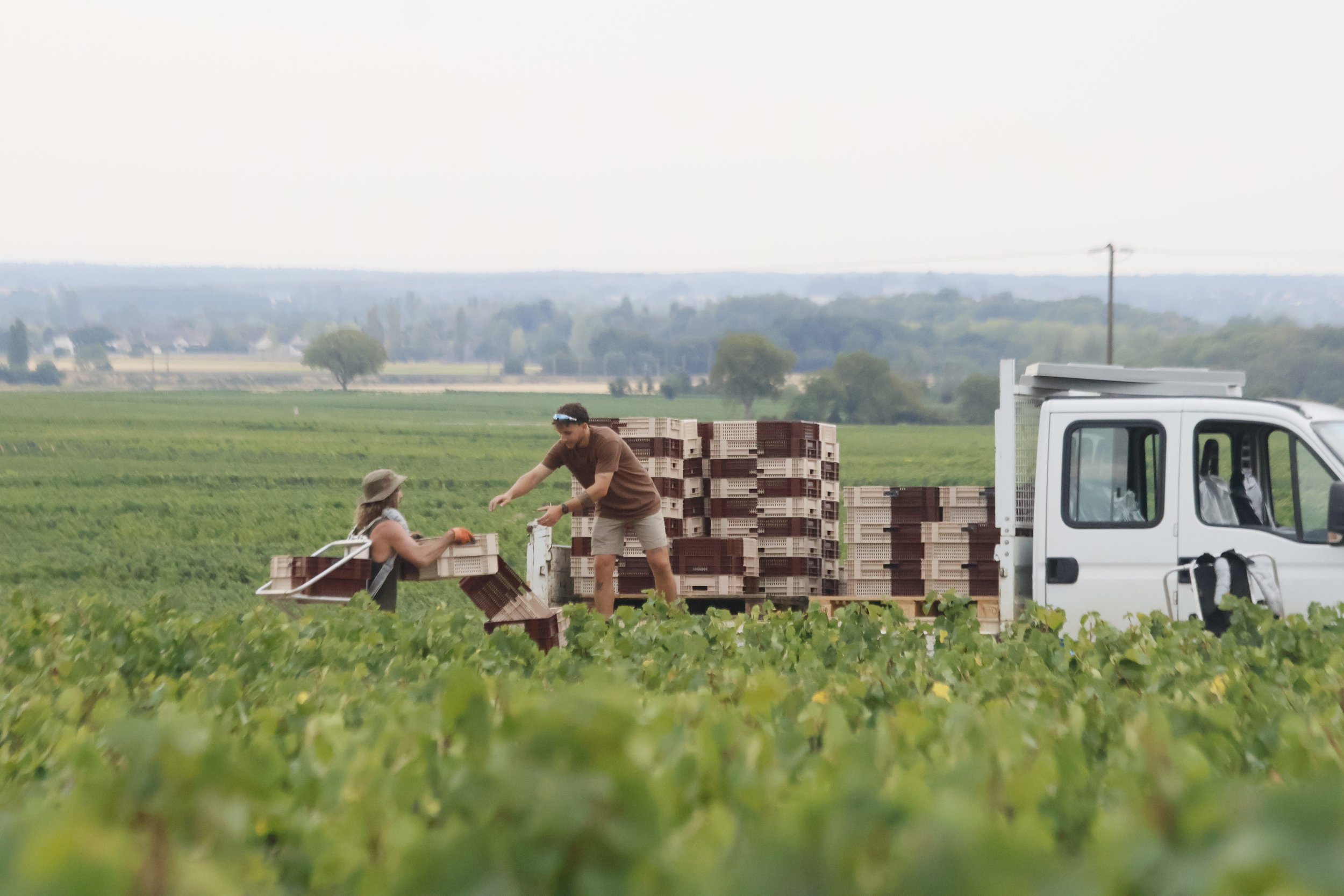
Photo by Stella